How a Connected Test gets registered and validated on the Platform
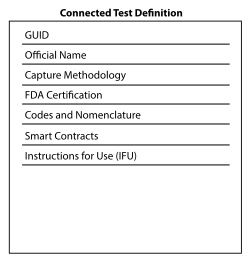
Each Test has a definition, and we store this definition within our Connected Test Registry. The Connected Test Definition contains all the relevant information to drive logic within the system and informs and automates the workflows throughout the system. Each Connected Test Definition contains a globally unique identifier (GUID); its official name; vendor agnostic capture methodology and standards such that any reader can read the Test; its certification that it has been FDA authorized and for what purpose. It also contains all the relevant codes and nomenclature links that describe it.
This is effectively a digital “label”, as defined in 21 CFR Part 801 of the FDA regulations, that also encodes Instructions for Use (IFU) and ensures that only registered, validated Test are made available throughout the platform. This is enforced as a primitive type in the system and cannot be overridden.
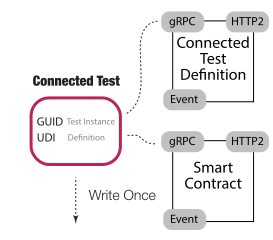
The Connected Test Definition also stores a Smart Contract that encapsulates the policies and use cases that govern when this Connected Test can be utilized and the conditions that must be true for its use. When a patient uses an individual Connected Test, each individual Test also has a unique identifier that allows us to cross-reference expiration dates, lot numbers, if there has been a recall, and the ability to flag this Test in-flight and prevent its use. Every Connected Test’s GUID, its respective Definitions’ UDI, and the Workspace ID form a tuple that is hashed into a 160-bit digest. This digest makes the record addressable on the block chain.