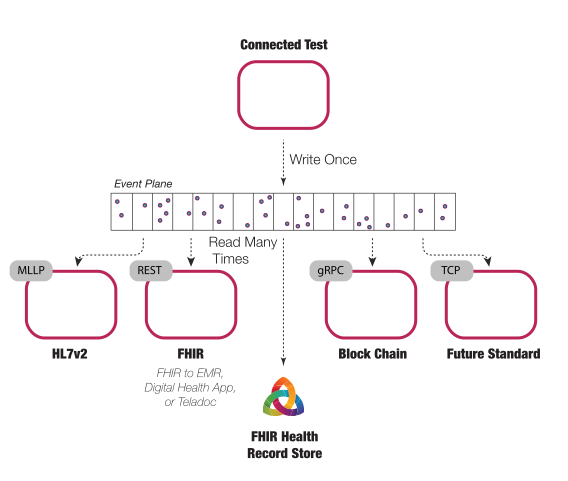
Existing Standards as Foundations
Our entire system is built using existing standards: clinical data exchange standards that accelerate interoperability; globally distributed networking standards that accounts for failure and low-bandwidth scenarios; efficient non-blocking threading models that maximize compute; zero-trust and consent-based security standards that intercept, flag, and audit what actors do with services, applications, and Connectors; and all governed through Smart Contracts that create immutable records on any public or private layer one block chain, which drives trust and transparency.
We leverage the National Plan and Provider Enumeration System (NPPES) to ensure every US Provider in our system is registered and has a valid National Provider Identifier (NPI). We ensure that all connected devices that interact on our system have a unique identifier with guidance from the FDA’s Unique Device Identification System (UDI System). We anchor, validate and test every record device transaction based on the UDI. We utilize the Minimum Lower Layer Protocol (MLLP) to add support for HL7v2. We expose all Spec Resources as OpenAPI accessible REpresentational State Transfer (REST) endpoints serialized in JSON format. For rural areas with weak internet penetration and low bandwidth, we use the standard GraphQL to help reduce the digital and healthcare divide across populations. To maximize throughput and introduce reliable network transfer, we use the gRPC binary protocol over HTTP2 and serialize all data as Protocol Buffers including all FHIR resources.